If your watch shows a heart rate that lags behind your effort, spikes during intervals, or reads your cadence instead of your pulse, the sensor is probably fine. Band fit is the most common cause and the easiest to fix.
How the sensor works, briefly
Wrist heart-rate monitors shine light into the skin and measure what bounces back. Blood flow changes how much light returns, and the watch reads your pulse from that pattern.
It depends entirely on the sensor staying in steady contact with your skin. Any gap lets ambient light in and lets the watch move independently of your wrist, and both corrupt the signal.
The symptoms of a loose band
Heart rate lags behind effort. You start a hard interval and the number climbs thirty seconds later than it should.
Readings lock onto your cadence. A heart rate that sits suspiciously close to your steps per minute is the classic sign. The watch is reading the rhythm of your arm swing.
Random spikes or dropouts. Numbers that jump to 180 at rest, or fall to nothing mid-session.
The symptoms of a band that is too tight
Less discussed, but real. Over-tightening restricts blood flow in the capillaries the sensor is reading, which suppresses the signal rather than corrupting it.
Readings tend to come out lower than they should and feel flat rather than erratic. A permanent indentation in your skin after taking the watch off means you have gone too far.
Getting it right
Position the watch about a finger's width above the wrist bone, not sitting on it. The bone disrupts contact and there is less blood flow there.
Tighten until the watch will not slide when you shake your wrist, but you can still slip a finger under the band. That is the target.
For hard sessions, move the watch a little higher up the forearm and go one notch tighter. There is more tissue and better blood flow further up the arm. Loosen it again afterwards.
Why band type matters
This is where the choice of band has a practical effect rather than a cosmetic one.
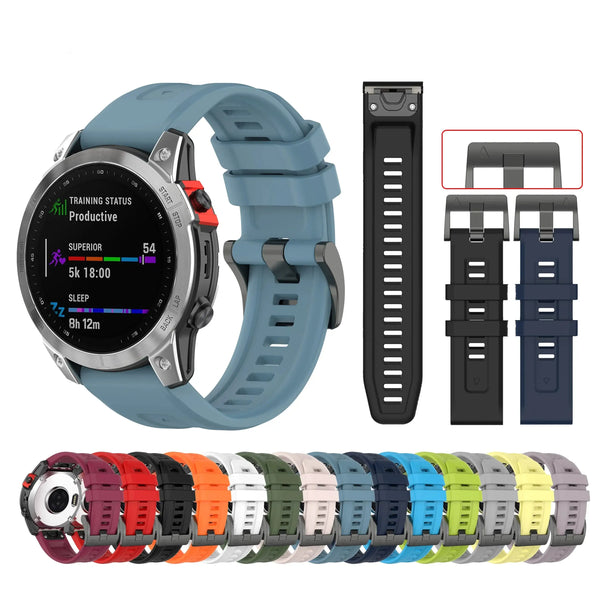
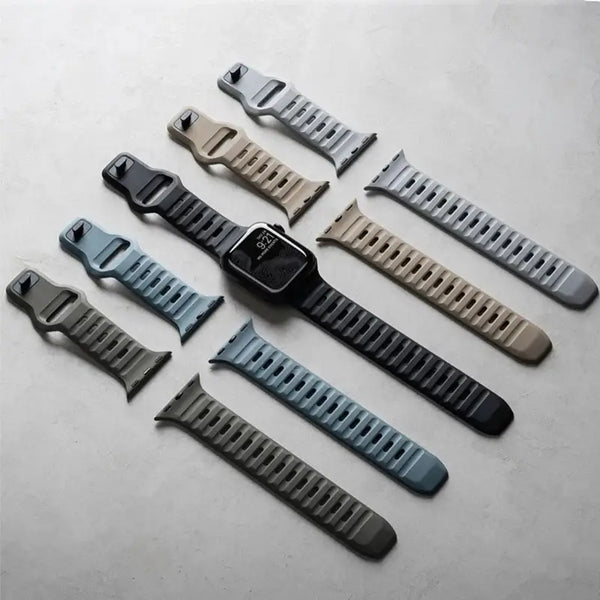
Closely spaced holes in silicone let you find the right tension. Widely spaced holes often leave you choosing between slightly loose and slightly tight, and neither is right.
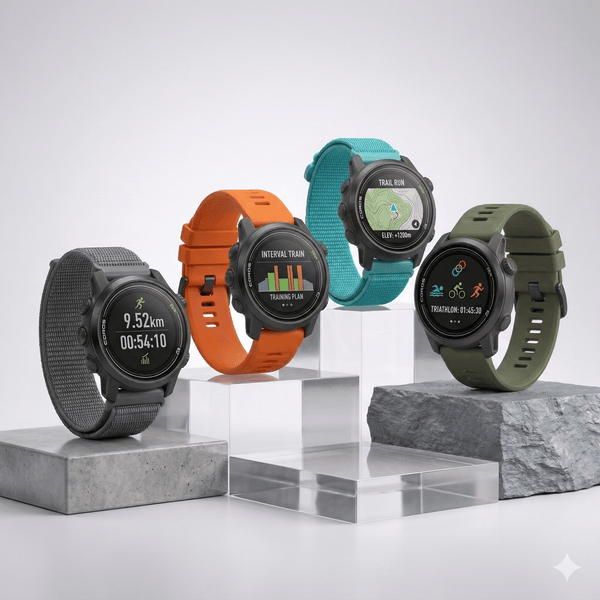
Hook-and-loop and alpine-style nylon adjust continuously, which is the best case. You can go a fraction tighter for a session and back afterwards.
Magnetic mesh also adjusts to any position, which is why it outperforms a link bracelet for this despite both being metal.
Link bracelets adjust in whole links, which is coarse. A bracelet sized one link too large is a common and invisible cause of bad data.
Stretch bands give you no adjustment at all. If one is sized slightly large, there is nothing to do about it.
Other things that affect readings
A dirty sensor. Sweat and skin residue build up on the back of the case and scatter the light. Wipe it when you change bands.
Cold. Blood flow to the extremities drops in cold weather, which makes wrist readings less reliable for the first few minutes of a winter run.
Tattoos. Dense ink absorbs the sensor's light. There is no fix beyond moving the watch to a clear patch of skin.
When it is not the band
If readings are wrong at rest as well as during exercise, and you have ruled out fit and a dirty sensor, the issue may be the watch. Wrist optical sensors are also inherently less accurate than a chest strap during high-intensity intervals, which is a limitation of the technology rather than a fault.
Shop bands for Garmin, Apple Watch, COROS and more.