Silicone, nylon and leather cover most of what people actually buy. They are good at different things, and the right answer depends less on taste than on how you wear the watch.
The short version
Silicone if you swim, sweat heavily, or want one band that does everything.
Nylon if you wear the watch all day and night, run long, or have had skin irritation before.
Leather if you wear the watch to an office and take it off to train.
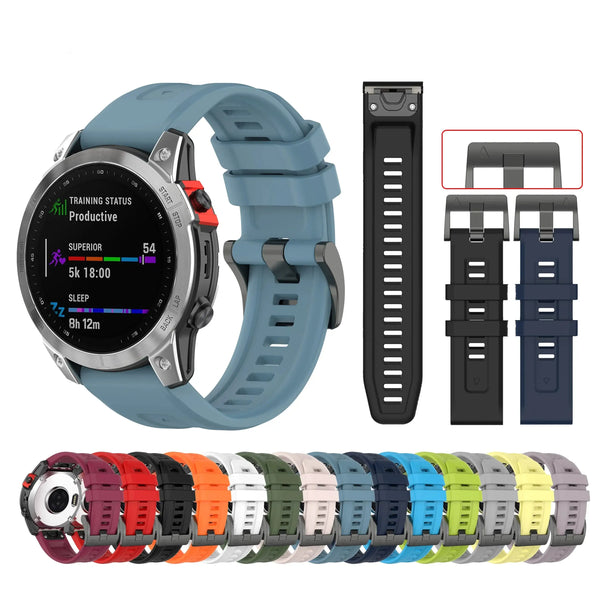
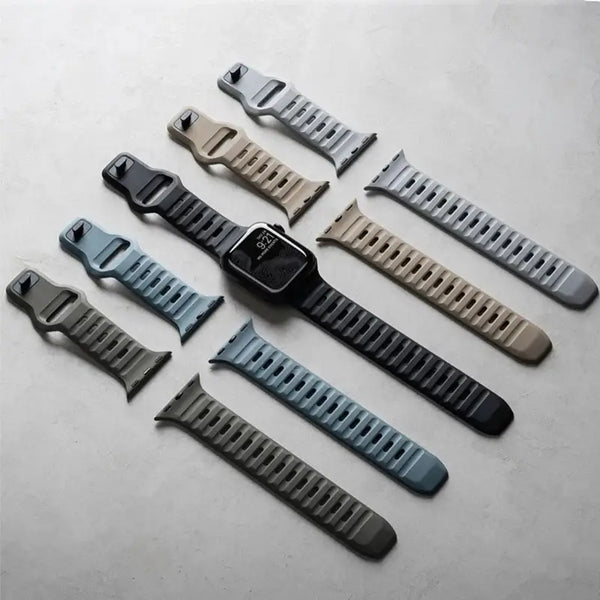
Silicone
Good at: water. It does not absorb anything, so it sheds sweat, survives chlorine and salt, and rinses completely clean in seconds. It is also the cheapest way to own several colours, and it is comfortable enough to sleep in.
Bad at: breathing. Silicone traps a layer of moisture against the skin, which over a long hot day gets clammy and is the usual starting point for irritation. It also looks like sports kit, which matters in some settings.
Lifespan: long. Silicone degrades slowly and mostly fails at the buckle or the keeper rather than the band itself.
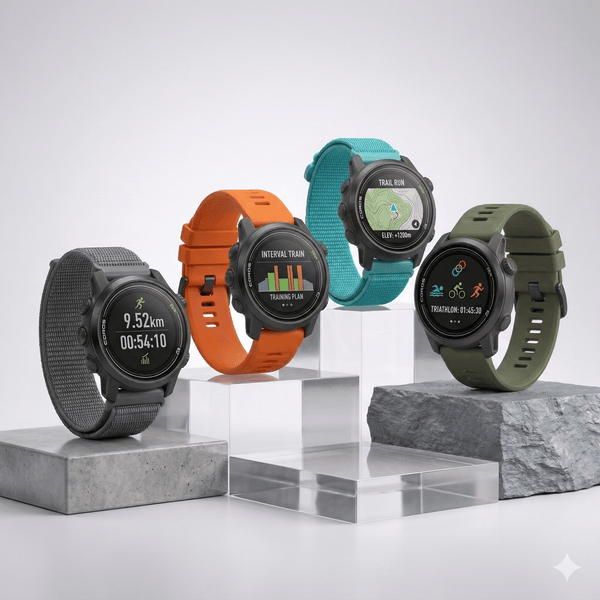
Nylon
Good at: comfort over hours. Woven nylon lets air move between band and skin, which makes it the most comfortable option for continuous wear and the kindest to sensitive skin. It is lighter than silicone and usually adjusts continuously rather than by hole, which helps get the fit exactly right.
Bad at: water. Nylon holds it in the weave, so it stays wet after a swim and takes considerably longer to dry. Over months of pool use it can hold a smell that is hard to shift.
Lifespan: moderate. Nylon frays eventually, usually at the edges where it passes through the keeper.
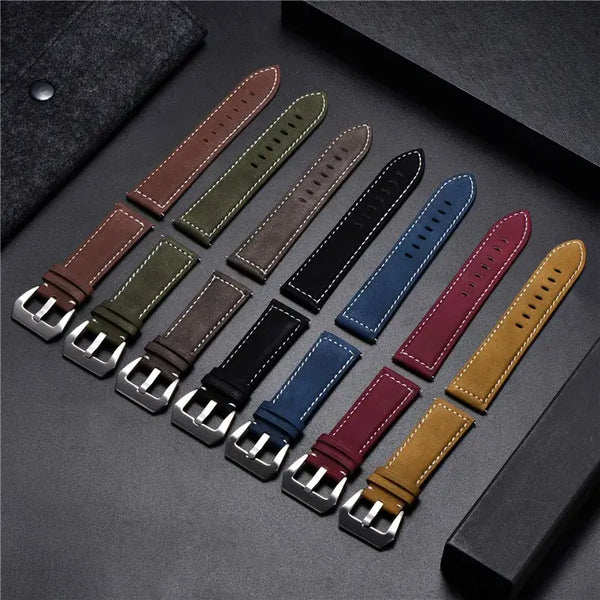
Leather
Good at: looking like a watch rather than a device. Nothing else changes the character of a smartwatch as much. It also softens and improves with wear in a way no synthetic does.
Bad at: everything involving moisture. Leather absorbs water and sweat, stiffens as it dries, and cracks at the fold points. It is also the least adjustable, since you are limited to punched holes, and the underside degrades long before the top shows wear.
Lifespan: depends entirely on care. Kept dry and rotated, years. Worn in the shower daily, months.
What about hybrids?
Leather on top, silicone underneath. You get the look from the outside and sweat resistance against the skin, and the leather lasts far longer because it never touches moisture.
If you want one band that genuinely covers work and the gym, this is the honest answer rather than a compromise.
And metal?
Worth a mention for completeness. Mesh and link bracelets look the best of anything and are the worst for training: they hold sweat, add weight, and the clasp suffers in chlorine and salt water. Mesh has one practical advantage that matters more than looks, which is that the magnetic clasp adjusts to any position.
How the choice affects your data
Wrist heart-rate sensors need steady skin contact. That makes adjustability a performance feature, not a convenience.
Nylon with a hook-and-loop closure and mesh with a magnetic clasp both adjust continuously, so you can go a fraction tighter for a hard session and loosen afterwards. Hole-punched silicone and leather give you fixed steps, and the right tension often falls between two of them.
Why most people end up with two
No single material is good at everything, and swapping takes seconds on almost every watch. Silicone or nylon for training and sleep, leather or metal for the rest, is the pattern most people land on.
It also makes both bands last longer, since each gets a day to dry out between wears.
Shop bands for Garmin, Apple Watch, Samsung Galaxy, Pixel Watch and more.